Colorado planning guide
How to get a Colorado marriage license
Colorado has one of the simplest — and most unique — marriage laws in the U.S. Here's exactly what you need to make your elopement or small wedding legal.
The basics
- Where: Any Colorado county clerk & recorder's office. You do not have to marry in the same county where you got the license.
- Cost: Currently $30, cash only in most counties.
- ID: Valid government-issued photo ID for both partners.
- Waiting period: None. The license is valid the moment it's issued.
- Validity: 35 days from the date of issue — the ceremony must happen within that window.
- Return: The signed license must be returned to the issuing clerk within 63 days of the ceremony.
- Residency: None required. Out-of-state couples are welcome.
- Age: Both partners must be 18 or older (16–17 requires judicial approval; under 16 is not permitted).
- Witnesses: None required.
Colorado self-solemnization — you can marry yourselves
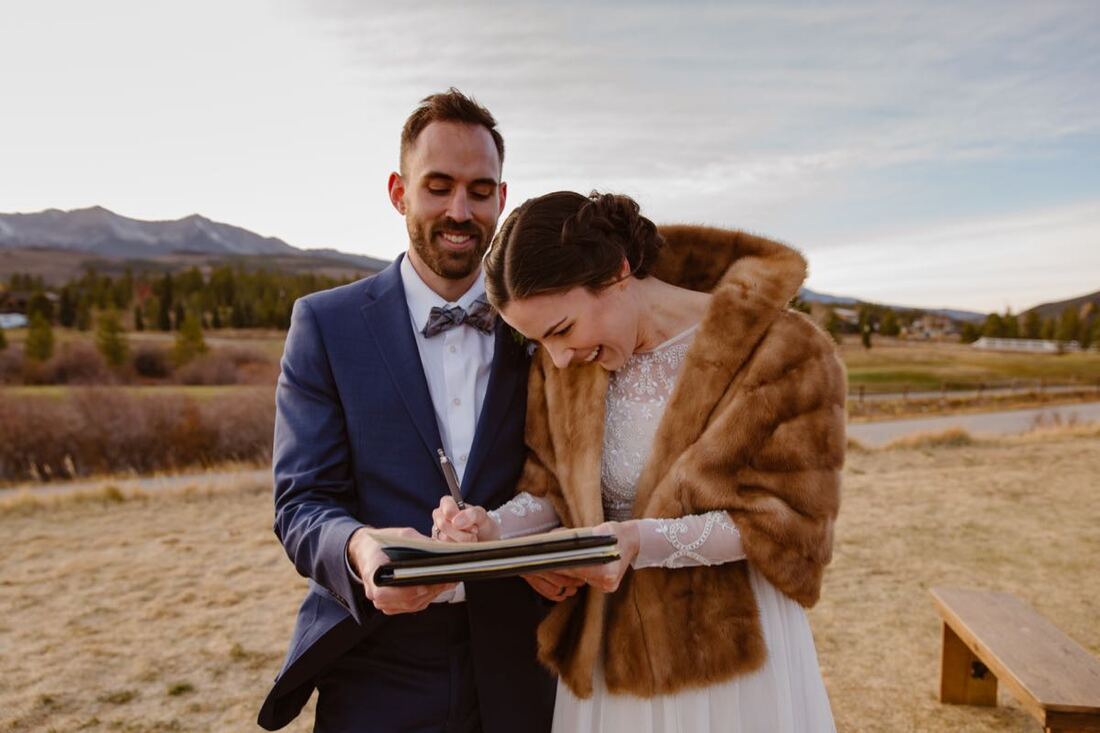
Colorado is one of the only U.S. states that allows self-solemnization (C.R.S. § 14-2-109). That means the couple can sign the marriage license themselves as both the parties and the officiant — no minister, judge, or witnesses required.
For elopements this is huge: you can stand on a 12,000-ft ridge, exchange your vows in private, sign the paperwork with a rock as your desk, and be legally married. No third-party officiant fee, no scheduling around anyone else.
Step-by-step
- Pick a county. Any Colorado county works. Many couples choose the county closest to their ceremony spot (e.g. Summit County for Lake Dillon, Larimer County for RMNP).
- Book a clerk appointment. Most mountain counties require an appointment. Book it 1–2 weeks before your ceremony date.
- Bring: photo ID for both partners, $30 in cash, and Social Security numbers (a card isn't required, just the numbers).
- Get the license. Same-day issuance. You walk out with a signed license valid for 35 days.
- Have your ceremony. Self-solemnize on your own, or have an officiant. Both partners sign the license.
- Return it. Mail or hand-deliver the signed license back to the issuing county within 63 days. They mail a certified copy to you.
Common questions
Can we get married the same day we pick up the license?
Yes. There is no waiting period in Colorado.
Do we need a Colorado officiant?
No. You can self-solemnize, use an out-of-state officiant, or use a Colorado officiant — all are legal. If you'd like a friend or family member to lead the ceremony, we built a free tool that walks you through writing a personal script together: ceremony.customweddingsofcolorado.com.
Do we need witnesses?
No. Witness signatures are optional in Colorado.
🐾 Can our dog sign the marriage license?
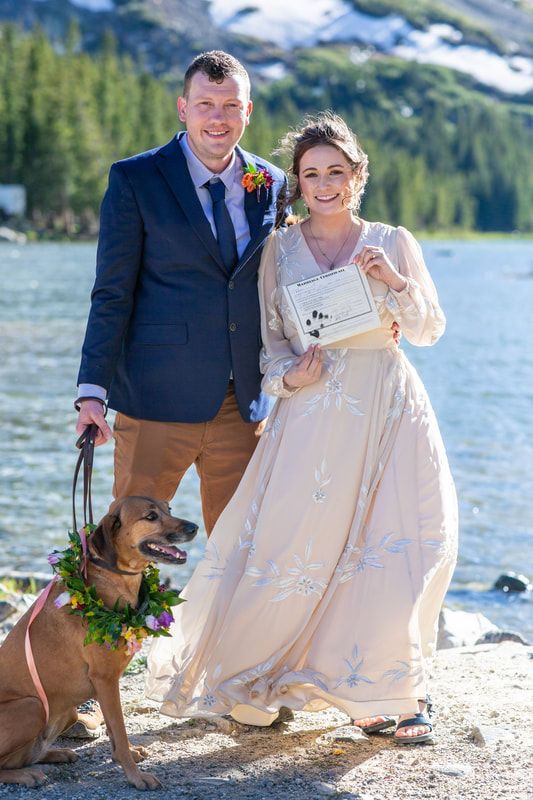
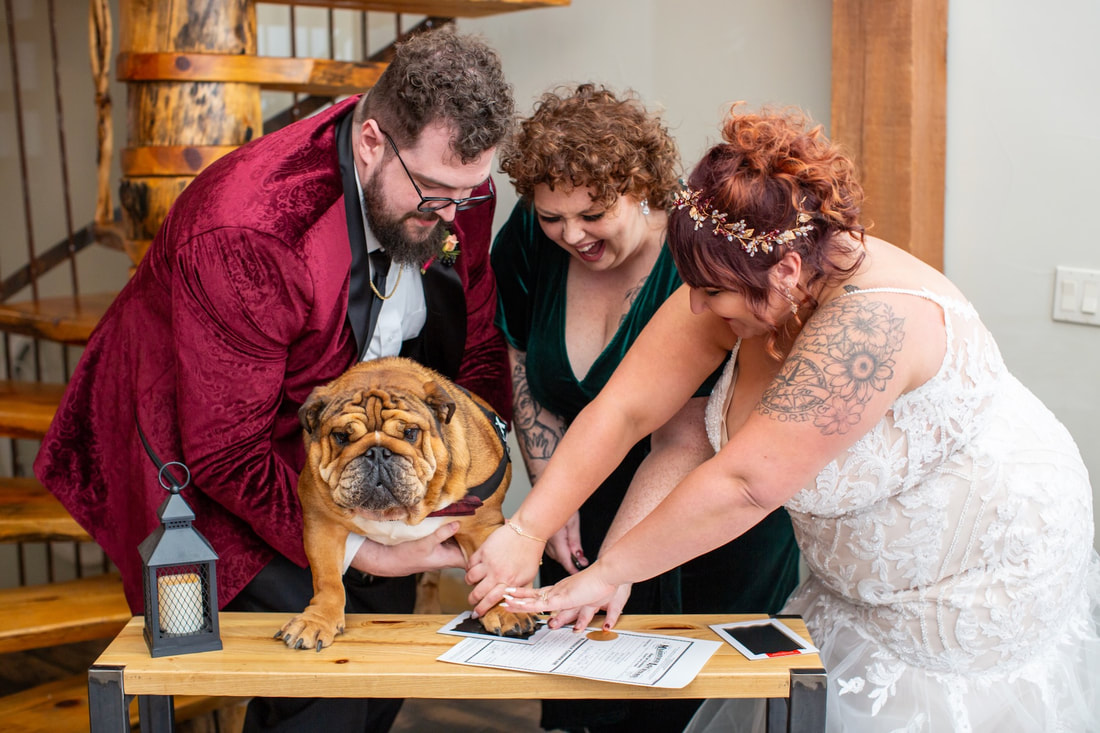
It's a beloved Colorado tradition — a muddy little paw print in the witness section — but it's getting harder to pull off. Some county clerks (including El Paso County / Colorado Springs) no longer accept paw prints because the ink interferes with their scanning machines. Other counties still welcome them.
Two things to do: (1) call the issuing courthouse before you plan on it, and (2) if you're set on it, ask a county that does allow paw prints. A great workaround: make a photocopy of your license, send the official one back to the county, and let your fur-baby sign the keepsake copy.
Full story on the tradition (and the counties that have changed their rules): Colorado Marriage License — How, When and Where.
Ready to plan the ceremony itself?
Build a transparent quote for your Colorado elopement in about a minute — pick a destination, package, and any add-ons.
Build your quote →This guide is informational and current as of 2026. Confirm details with the county clerk & recorder's office where you plan to apply — fees and hours can change.